
What Is Romantasy? A Simple Guide to Romance Meets Fantasy
Romantasy is fiction where the love story and the fantasy world carry equal weight, so taking away either one collapses the book. The word blends romance and fantasy. A romantasy has a magical setting with real stakes, a central couple whose relationship drives the plot, and a romance the reader is invested in from the first meeting. Fae courts, dragon riders and fated mates are its most familiar territory.
If you have just seen the word on a bookshop table and wondered what it covers, that definition is the whole of it. Everything else is detail, argument and very strong opinions about cover design.
What does romantasy mean?
Romantasy means romance plus fantasy, with neither one playing second fiddle. The test most readers use is a simple thought experiment: delete the magic and see what is left, then delete the love story and see what is left. In a true romantasy, both deletions break the book.
That test rules a lot out. A sprawling epic fantasy where two characters share a kiss in book four is fantasy with a romantic subplot. A contemporary romance with one ghost in the attic is a romance with a paranormal flourish. Romantasy sits in the middle, where the plot question (will the kingdom fall?) and the romance question (will these two admit it?) are tangled together, and answering one forces an answer to the other.
The tangle is the appeal. When the man she is falling for is also the heir of the enemy court, every political scene is a romantic scene and every romantic scene has political consequences. Readers call that kind of setup load-bearing romance, and it is the engine of the whole category. Our romantasy stories hub collects stories built on exactly that engine.
Is romantasy a genre?
Romantasy is a genre in every way that matters to a reader. Bookshops give it its own tables, publishers use it on covers, and readers type it into search bars expecting a particular kind of book. Purists will point out that romantasy is technically a crossover of romance and fantasy rather than a separate tradition, and that books fitting the description existed long before the label caught on.
Both things are true. The label is new, the kind of story is not. What the label added was a shared shorthand, so a reader can say romantasy and be understood to mean a magical world, a central couple, high stakes and plenty of yearning.
What is the difference between romantasy and fantasy romance?
The difference between romantasy and fantasy romance is mostly one of emphasis, and plenty of readers treat the two terms as interchangeable. Where people do draw a line, fantasy romance tends to mean a romance novel first, set in a magical world, with a love story that wraps up in one volume. Romantasy tends to mean a book where world-building, politics and romance share the weight equally, often spread across a series.
Two neighbouring labels cause similar confusion:
- Fantasy with a romantic subplot. The quest is the point. The romance is a pleasant extra, and you could cut it without losing the plot.
- Paranormal romance. Usually set in our world, or something close to it, with vampires, shifters or witches living alongside ordinary people. Romantasy usually builds a whole secondary world with its own maps, gods and rules.
- Dark romantasy. A darker branch of romantasy where the world takes real casualties and the love interest has done genuine harm. That subgenre has its own rules, covered in our guide to what dark romantasy is and how it differs.
None of these are tidy boxes. A vampire prince in an invented kingdom sits across at least two of them, and nobody is going to confiscate the book over it.
What can you expect from a romantasy book?
A romantasy book reliably offers three things: a world with its own rules, stakes that threaten more than the couple's feelings, and a central romance that develops across the whole story.
The world. Expect courts, kingdoms, magic systems and the occasional glossary. The common complaint from readers is that some books skimp here, offering a castle and a vague prophecy but nothing you could draw a map of. The well-loved ones give the world enough texture that it matters where the characters are standing.
The stakes. Wars, curses, trials, bargains with consequences. In romantasy the danger is rarely abstract, and it is usually personal to the heroine.
The couple. Romantasy almost always centres one couple, sometimes with a rival for her attention, and gives their relationship room to build. Slow burn is the default speed. If that pacing is your favourite part of reading, our explainer on how slow burn romance works breaks down why the wait pays off.
What are the most common romantasy tropes?
The most common romantasy tropes are the ones that make the fantasy setting do romantic work. A short list of the familiar ones:
- Fated mates. Magic decides they belong together, and at least one of them has opinions about that. The full breakdown is in our guide to the fated mates trope.
- Enemies to lovers. Rival kingdoms, opposing armies, an assassin and her target.
- Forbidden court romance. A princess and her guard, a mortal and a fae lord, two people whose union would break a treaty.
- Fae. Bargains, tricky wording, beautiful and dangerous courts.
- Dragons. Riders, shifters, hoards and bonds that cannot be undone.
- Forced proximity. A shared tent on campaign, a single room in an enemy castle.
Most romantasy stacks several of these at once, which is part of the fun.
Why did romantasy take off on BookTok?
Romantasy took off on BookTok because it is extremely easy to react to on camera. A big romantasy series delivers clear, dramatic moments — the first meeting, the reveal, the scene where he finally says it — and readers love filming themselves reaching those pages. The genre's covers are distinctive, the tropes are easy to name in a caption, and long series give a community something to binge and argue about together.
Two series became the usual reference points. A Court of Thorns and Roses by Sarah J. Maas follows Feyre, a huntress taken into the faerie lands of Prythian after killing a wolf in the woods. Fourth Wing by Rebecca Yarros sends Violet Sorrengail into a brutal war college for dragon riders. If either of those is how you heard the word, our lists of books like ACOTAR and books like Fourth Wing are the natural next step.
The popularity brought the usual backlash. Readers complain about interchangeable love interests, identical covers and worlds that are more mood board than map. That criticism is fair about some books and unfair about the category, and it is the same thing every booming genre goes through.
How do you pick your first romantasy?
The best way to pick your first romantasy is by trope, not by hype. Think about what you already love in other romance and follow it into the fantasy shelf.
- If you love enemies to lovers, look for rival kingdoms and war-college settings. Only One of Us opens with a week to kill the enemy's champion, Soren, on the sand in front of both kingdoms, and the small problem that he kissed you back last night. Our enemies to lovers stories hub has more.
- If you love friends to lovers and pining, look for a love interest with history. In In After Him, Cassien Ward has a voice nobody in town has ever refused, and you are the one person it has never worked on.
- If you love forbidden closeness and disguise, try In My Brother's Name, where a woman takes her sick brother's place at the knights' college and his best friend, Teague, knows her across the yard.
Also decide how dark you want it. A romantasy can be cosy, sweeping or genuinely brutal, and checking reviews or content notes before you start saves a lot of disappointment in chapter nine.
Where to read romantasy as an interactive story
Almost Kiss writes complete romance stories where you make the choices and the story remembers them, written for readers 18+, all chemistry and tension. A growing slice of the full Almost Kiss library is romantasy, from siren princes to dragon lords.
If you want to feel the genre from the inside, start with Only One of Us: an enemy champion, a deadline on the sand, and a kiss that has already happened. Read Only One of Us free, or try In After Him if you would rather fall for a best friend. Chapter 1 of every story is free, no sign-up.
Read it as a story
-
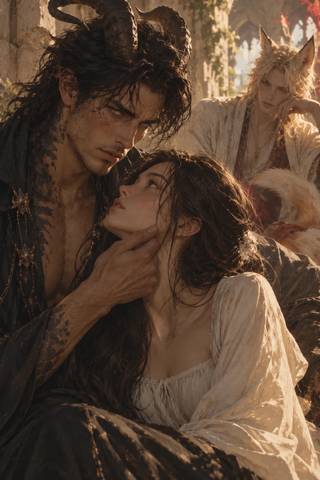
Dark Romantasy
The Dragon's Undoing
with Torren of Cinders
You were only there to make sure the brides could say no, and then the city's dragon looked at you and every flame in the room went out.
Read Chapter 1 free
-
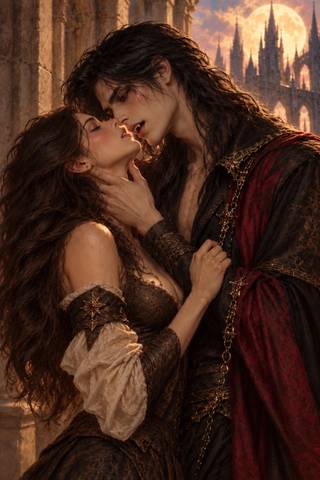
Dark Romantasy Vampire
Bloodbound
with Severin Morcant
Your blood is the one thing every vampire alive would kill for, and the only one who won't take it is the man you came to kill.
Read Chapter 1 free
-
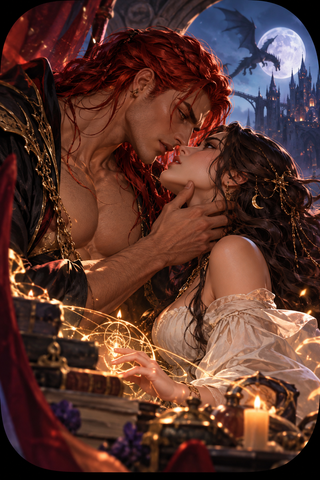
Dragon romance
What Fire Cannot Hoard
with Riven of the Red Vale
You went up the mountain to bind a dragon to the valley he was bleeding dry, and the spell bound him to you.
Read Chapter 1 free
Questions readers actually ask
What is romantasy?
Romantasy is a blend of romance and fantasy in which the love story and the magical world are equally important. The central couple's relationship drives the plot as much as the war, the curse or the court does, so removing either half would leave a book that no longer works. The word is a portmanteau of romance and fantasy.
What is the difference between romantasy and fantasy romance?
Many readers use romantasy and fantasy romance as synonyms. When people do separate them, fantasy romance usually means a romance novel with a magical setting, while romantasy means a book where the world-building, the political stakes and the love story share the load equally, often across a multi-book series.
Is romantasy a genre?
Romantasy works as a genre in practice. Bookshops shelve it separately, publishers market it under that name, and readers search for it by that word. Strictly speaking it is a crossover of two older genres, romance and fantasy, but the label now describes a recognisable set of expectations about world, couple and stakes.
What should I read first if I'm new to romantasy?
Start with the trope you already love in other books. Enemies to lovers readers tend to enjoy war-college and rival-kingdom stories, fated mates fans gravitate to fae and shifter worlds, and slow burn readers do well with court intrigue. Picking by trope rather than by hype gives a first romantasy the best chance of landing.