
Dark Romantasy: Where Romantasy Goes When It Stops Being Polite
Dark romantasy is fantasy romance where the darkness is structural rather than decorative — the world is genuinely hostile, the love interest has done real harm, and the cost of the romance gets paid on the page. It is defined by moral register and stakes, not by heat level. A closed-door book can be dark romantasy. An explicit one can be perfectly gentle.
The word has gone slightly soft from overuse. It now gets applied to any fantasy romance with a black cover, a sword, and a man who broods in a study. That's a shame, because the actual thing it describes is specific and worth protecting, and readers can tell when they've been sold it and not given it.
Three labels that keep getting used interchangeably
Romantasy is the broad category. A fantasy world and a central love story, both load-bearing. Remove the magic and the plot collapses; remove the romance and nobody finishes the book. That's the whole definition, and it is deliberately wide.
Dark romantasy is romantasy plus a moral condition. The story is willing to let troubling things be true and then leave them true. Someone the reader likes does something indefensible, and the narrative doesn't rush in with an explanation that dissolves it. The world has teeth, and it uses them on named characters.
Dark romance is the third term and the source of most of the confusion, because it isn't a fantasy label at all. Dark romance tends to be contemporary or historical — the mafia house, the arranged captivity, the man whose behaviour would get him arrested in any world with functioning police. Its danger is aimed squarely at the heroine, and the discomfort is the point.
The overlap is real. A fae king who takes a bargain in bad faith and keeps a woman in his court on a technicality is in both rooms at once. But the labels answer different questions. Dark romance asks what is he doing to her. Dark romantasy asks what kind of world is this, and what does surviving it require.
Heat and darkness are separate dials
The most common mistake in the whole conversation is treating explicitness and darkness as one measurement. They aren't related.
Heat is a description of camera position: how much of the physical relationship happens on the page. Darkness is a description of moral nerve: what the story is prepared to admit about its characters and refuses to take back.
Wuthering Heights has no explicit content and contains some of the nastiest people in English fiction, doing lasting damage to each other across two generations. Dracula is a book about predation dressed as courtship, and its most frightening scenes are frightening precisely because of what stays off the page. Neither would be shelved as spicy. Both are darker than a great deal of what currently gets marketed as dark.
Run it the other way and it holds too. A book can be extremely explicit and have no darkness in it at all, because nothing in the relationship costs anyone anything. The conflict is a misunderstanding, the third-act rupture lasts eleven pages, and the hero's terrible reputation turns out to be a rumour started by his enemies.
That's a perfectly good book. It just isn't a dark one, and calling it dark trains readers to distrust the word.
What actually makes a romantasy dark
Four tests, and a book generally needs at least three of them.
The world takes real casualties. Not offstage armies — people the reader has spent time with. Fourth Wing opens with a war college where cadets die crossing a bridge in the first act, which establishes the rules before any romance gets going. Once you know the setting kills, every scene inherits the tension.
The love interest's worst act is not retconned. This is the big one, and it's where most books flinch. If his menace is entirely reputational and the actual on-page behaviour is impeccable, he isn't dark, he's marketed as dark. The genuine article does something in front of the heroine that she cannot argue away, and the book lets her sit with it. That's the whole territory of morally grey love interests and where the line actually falls, and it is the single reliable predictor of whether a dark romantasy is going to deliver.
The aftermath is on the page. Dark stories that skip recovery are just violent ones. The reason the middle books of long romantasy series so often outperform their openers is that they spend their length on consequence — nightmares, guilt, a relationship that has to be renegotiated by two people who are not who they were. A Court of Mist and Fury spends its opening on Feyre's trauma rather than her victory, and readers noticed.
The romance is not a prize for surviving. In the weaker version, the darkness is a gauntlet and the love story is what you get at the end for clearing it. In the strong version, the love story is implicated. Loving him is itself one of the morally questionable decisions, and she knows it.
The mislabelling problem, and why readers are tetchy about it
Ask around and you'll find two opposite complaints running at the same time, which is usually a sign a category is mid-argument with itself.
One camp picks up a book sold as dark and finds a fairly standard court fantasy with a grumpy hero and a fade to black. The other picks up something sold as romantasy and gets hit, unwarned, by content it would have wanted flagged. Both complaints are about the same failure: the label is being used as an aesthetic rather than as information.
Content warnings have become standard in the darker end of the genre, and the reason is practical. Readers are not asking to be protected from difficulty. They are asking to choose their difficulty. A book that tells you what it contains gets more trust, not less, and the readers who want that exact thing can find it instead of bouncing off in chapter nine.
Where vampires sit in all this
Vampire books are the oldest reliable home for dark romantasy, because the darkness is built into the premise instead of applied to it. He is a predator, she is food, and every gentle moment is a decision made against instinct. That's why the vampire romance subgenre keeps outliving its own obituaries — the moral problem is baked in, so the author doesn't have to keep manufacturing one.
Add power and it sharpens further. A vampire king with a court to hold can't be softened without cost, because mercy in front of the wrong people is a political liability. His restraint is expensive, which is exactly what makes it legible as love.
None of that requires a single explicit scene. The tension lives in the almost — in the hand that stops, the door that doesn't open, the sentence he doesn't finish. That's the register MARKED, our interactive vampire king story, is written in: dark about power, unambiguous about consent, and built on what he stops himself from taking.
What you're really asking for
When a reader says they want dark romantasy, they rarely mean they want to be shocked. They mean they want a story that isn't managing them — one that trusts them with a hero who has done something unforgivable, a world that doesn't rearrange itself for the protagonist's convenience, and a happy ending that had a price attached.
That's the standard worth holding the label to. Not how much happens in the bedroom. How much the book is willing to lose.
If that's the flavour you're after, MARKED is built on it. A vampire king who is genuinely dangerous to everyone in the room, a court that punishes his softness, and you refusing to kneel — with a story that remembers every choice you make.
Start reading MARKED free, then look at the rest of the story shelf — The Ruin of Miss Everly runs the same register in Regency drawing rooms, where ruin is a real and permanent thing. Chapter 1 is free, no sign-up — start below.
Read it as a story
-
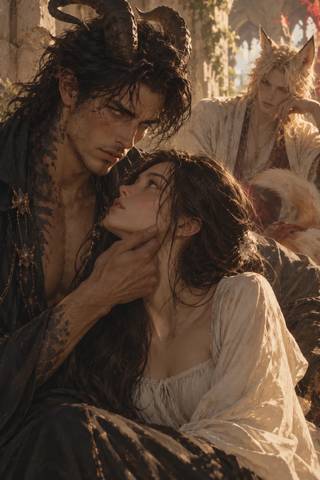
Dark Romantasy
The Dragon's Undoing
with Torren of Cinders
You were only there to make sure the brides could say no, and then the city's dragon looked at you and every flame in the room went out.
Read Chapter 1 free
-
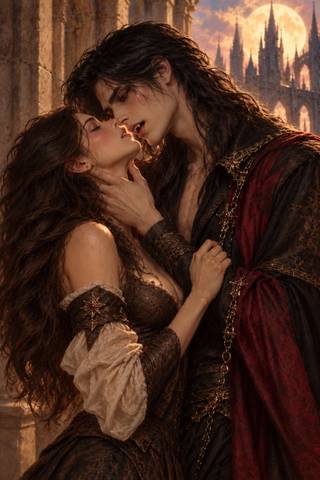
Dark Romantasy Vampire
Bloodbound
with Severin Morcant
Your blood is the one thing every vampire alive would kill for, and the only one who won't take it is the man you came to kill.
Read Chapter 1 free
-

Dark mafia romance
Terms & Conditions
with Lazar Tsarev
You came to kill him and he already had your name printed on the folder.
Read Chapter 1 free
Questions readers actually ask
What is dark romantasy?
Dark romantasy is fantasy romance in which the darkness is structural rather than atmospheric. The world is genuinely dangerous, the love interest has done real harm that the book does not excuse, and the romance costs the characters something they cannot get back. It is a moral register, not a heat rating.
What is the difference between romantasy and dark romantasy?
Romantasy needs a fantasy world and a love story that are both load-bearing. Dark romantasy adds a moral condition — the story is willing to let genuinely troubling things be true and stay true. Every dark romantasy is a romantasy. Most romantasy is not dark, however many shadows are on the cover.
Is dark romantasy always explicit?
No. Heat and darkness are separate axes. A closed-door book can be brutal about power, guilt and consequence, and an explicit one can be emotionally weightless. Explicitness measures how much of the physical relationship happens on the page. Darkness measures what the story is prepared to admit about its characters.
What is the difference between dark romantasy and dark romance?
Dark romance is usually contemporary or historical, and its danger points at the heroine — captivity, obsession, a hero whose behaviour would be alarming anywhere. Dark romantasy puts the danger in the world as well, through curses, courts, wars and gods. Plenty of books sit in both, but neither label implies the other.
Where should I start with dark romantasy?
Start with the flavour of danger you actually want. If you want appetite and restraint, go to vampires. If you want politics and consequence, go to court fantasy. If you want a hero the narrative refuses to fully forgive, go looking for morally grey rather than for the word dark on the cover.