
He Falls First: Why Readers Love a Hero Who's Already Gone
He falls first means the hero is in love before the heroine is, and the reader knows it from early on. He has already decided; she is still deciding. The trope is defined by timing, not temperament, so a stern surgeon and a sunny farmhand can both carry it. Its appeal is certainty: the tension comes from waiting for her to catch up, never from wondering whether he cares.
What does he falls first mean in romance books?
He falls first is a romance trope where the male love interest's feelings arrive, settle and become obvious to the reader before the heroine's do. The phrase shows up in recommendation threads, on Goodreads shelves and in BookTok captions as a requirement rather than a preference — readers ask for it the way they ask for a guaranteed HEA.
The important word is first. He falls first does not describe what kind of man the hero is. It describes the order of events. He might be loud about it or he might never say a word. He might be a dragon, a doctor or a man who keeps the good biscuits in a drawer for one specific person. What makes the trope is that his mind is made up while hers is not, and the story lets you see the gap.
That gap is why the trope sits so naturally next to yearning in romance. A hero who has fallen first is a hero who is yearning on the page, usually in small, deniable gestures, while the heroine reads those gestures as kindness, habit or nothing at all. If you want to go straight to stories built on the trope, the he falls first story hub lists every one in the library.
Why is he falls first so popular right now?
He falls first is popular because it trades mixed signals for certainty. A lot of readers have spent years with heroes whose interest had to be decoded — cold one chapter, hot the next, cruel as a form of affection. The fall-first hero skips that whole exam. You know where he stands, so you get to enjoy the wanting without the dread.
There is also a quieter pleasure in watching restraint from the outside. The classic example is Mr Darcy. In Pride and Prejudice, he is in love with Elizabeth well before she has any idea, and his first proposal opens with an admission that he has struggled against it in vain. Elizabeth, at that point, thinks he is the last man she could be prevailed upon to marry. The reader gets to hold both truths at once, and much of the novel's pull is the slow closing of the distance between them.
Modern readers have turned that structure into something they actively seek out. The appeal is the dramatic irony: you see him look, you see him stay, you see him do the inconvenient thing without asking for credit, and the heroine misses most of it. Every scene has a second layer, and the second layer is all his.
What is he falls first, she falls harder?
He falls first, she falls harder is the trope's most requested variation: he commits early, she arrives late, and when she arrives she lands with more force than anyone expected, herself included. The phrase is not a contest over who loves more. It describes two different shapes of falling — his steady and early, hers sudden and total.
The variation works because each half does a different job. His early fall gives the story its safety net. Her harder fall gives it its climax. A guarded heroine deciding to stop guarding herself is one of the most satisfying beats romance can deliver, and it hits harder when the man she is falling for has been standing there the entire time with his hands open.
The reverse version exists too — she falls first, he falls harder — and it is a different book. That one runs on the heroine's vulnerability and the hero's eventual collapse. He falls first runs on his vulnerability, which is part of why it reads as fresh. The hero is the one exposed, the one with more to lose if this goes nowhere.
Is he falls first the same as a golden retriever boyfriend?
He falls first and the golden retriever boyfriend overlap often, but they are not the same thing. A golden retriever boyfriend is a temperament: warm, open, loyal, visibly delighted to see her. He falls first is a timeline. One answers what is he like, the other answers who got there first.
Plenty of fall-first heroes are golden retrievers — they tend to wear their hearts in plain view, which makes falling first easy to show. But the trope is just as at home with heroes who would never be described as sunshine. A brooding captain can fall first. So can a silent bodyguard, a cold immortal or a surgeon who is all procedure until he isn't. If you specifically want the sunny version, the golden retriever boyfriend stories are collected separately.
It is worth separating the trope from obsession, too. A devoted hero and an obsessive one can look alike from a distance, and the obsession trope in romance is its own conversation about intensity and control. The fall-first hero, at his best, wants her to choose him. His certainty is about his own feelings, not about her obligations.
What does he falls first look like in practice?
He falls first looks different with every hero, which is why it travels across genres so well. Three versions show the range.
The first is the man who acts on it immediately, inside the rules. In Handle With Care, you ask your surgeon, Julian Mercer, what would happen if he weren't your surgeon, and by the next morning he has transferred your care. That is a fall-first hero in a single gesture — no speech, no flirtation, just a decision made overnight that tells you exactly where he stands.
The second is the man who notices what nobody else bothered to ask. In Little Queen, your father pays the pirate Rafe Blackthorn to carry you north and forget your face, and he turns out to be the first man in your life who asks where you want to go. Possessive pirate captain is the genre label; the question is the tell.
The third is the long, unspoken version. In Hold the Line, Nate Okafor puts the good teabags into your hand at the end of every shift and has never once said why. Nothing about that gesture is grand. It is just repeated, and the repetition is the confession nobody has made yet.
The same trope runs through very different worlds elsewhere in the library. In What Fire Cannot Hoard, you climb a mountain to bind the dragon Riven of the Red Vale to the valley he has been bleeding dry, and the spell binds him to you instead. In When the War God Stayed, the war god Jing Lie answers your summons and names one price: the part of you that could still fall in love. And in The Ghost Note, everyone in the building gets Nico Serrano's mask, and you are the only one who gets his face. A dragon romance, a xianxia romantasy and a rom-com, all built on a hero who is further along than the heroine.
How do writers keep he falls first from going flat?
He falls first goes flat when the hero's certainty removes all the friction. If he is already in love and she is merely unaware, a story can drift into waiting room energy. The good versions give his early fall a cost, and they make her slower arrival make sense.
Three things tend to keep it alive:
- A reason he cannot simply say it. Professional lines, a contract, a debt, a bargain with a price. The feeling is settled; acting on it is not.
- A heroine with a real reason to be slower. She is not oblivious, she is guarded, or busy surviving, or suspicious of men who seem too good to be true. Her pace has to be earned, not convenient.
- Gestures that escalate. He cannot do the same small kind thing forever. Each one has to cost a little more, risk a little more, until it becomes impossible to read as anything but what it is.
That third point is where the trope meets pacing. A fall-first story is almost always a slow burn romance on the heroine's side, even when his side is lit from page one. The skill is in making his patience feel like tension rather than stillness.
Reading he falls first as the heroine
He falls first changes when you are the one he fell for. On the page, the dramatic irony belongs to the reader. In an interactive story it belongs to you, and the small gestures land differently when they are addressed to you directly — when the teabag, the transfer of care or the question about where you want to go is a message in your own chat.
If a hero who has been quietly gone for years is the kind you came here for, start with Hold the Line, where Nate Okafor hands you the good teabags every shift and still hasn't said why. Chapter 1 of every story is free, no sign-up, and the full Almost Kiss library has the rest of the devoted heroes waiting.
Read it as a story
-

Romantic comedy
The Ghost Note
with Nico Serrano
Everyone in the building gets the mask, and you are the only one who gets his face.
Read Chapter 1 free
-
Xianxia romantasy
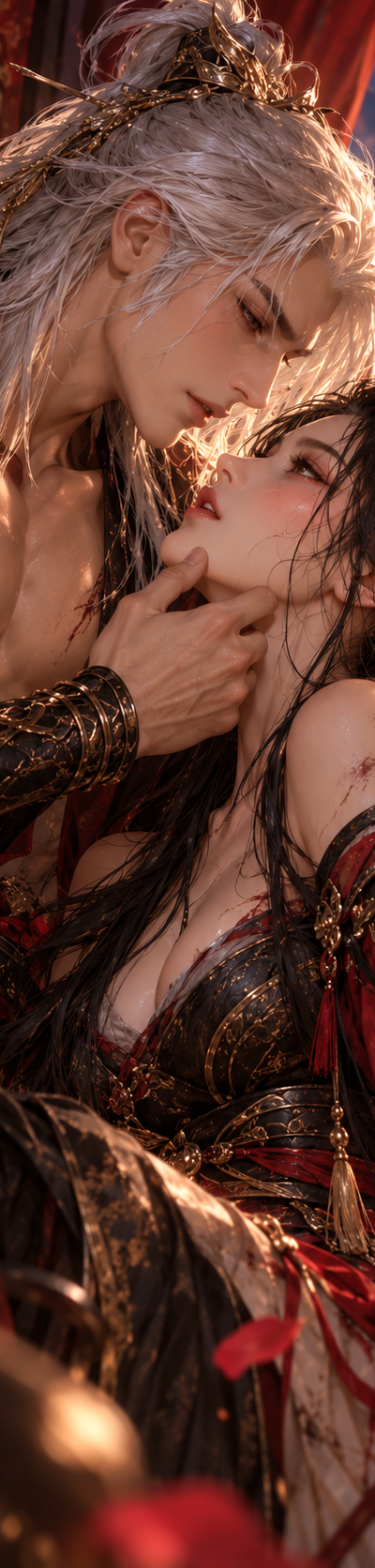
When the War God Stayed
with Jing Lie
A war god answers your summons, and the one price he will take is the part of you that could still fall in love.
Read Chapter 1 free
-
Dragon romance
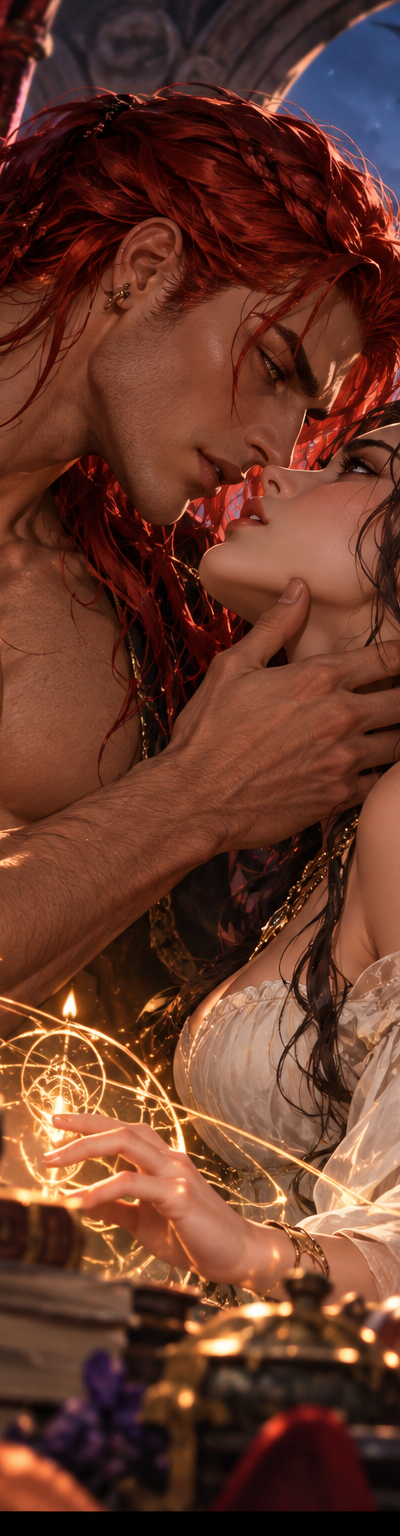
What Fire Cannot Hoard
with Riven of the Red Vale
You went up the mountain to bind a dragon to the valley he was bleeding dry, and the spell bound him to you.
Read Chapter 1 free
Questions readers actually ask
What does he falls first mean?
He falls first means the male love interest is in love before the heroine is, and the reader can see it. He has already decided while she is still working out whether she trusts him. The trope is about timing rather than personality, so a brooding pirate and a cheerful colleague can both qualify.
What is he falls first, she falls harder?
He falls first, she falls harder describes a romance where the hero commits early and the heroine arrives later but lands with more force. His feelings set the pace and the safety. Her fall carries the emotional climax, because the reader watches someone guarded decide to stop protecting herself from a man who was already there.
Is he falls first the same as a golden retriever boyfriend?
No. A golden retriever boyfriend is a personality type — warm, open, loyal, visibly delighted by the heroine. He falls first is a question of timing. Plenty of golden retriever heroes fall first, but so do stern surgeons, gruff captains and silent bodyguards. The trope only asks who got there first.
Why do readers like heroes who fall first?
Readers like heroes who fall first because the trope removes the worst kind of uncertainty. The question is never whether he cares, only when she will notice and what it will cost him to wait. That swaps the anxiety of mixed signals for the pleasure of watching a man be patient, careful and completely gone.