
Gothic Romance vs Dark Romance: Two Different Kinds of Dread
Gothic romance and dark romance produce dread from opposite directions. In gothic romance the dread comes from the place — an isolated house, a withheld secret, an atmosphere that is wrong before anyone does anything wrong. In dark romance the dread comes from the person, specifically the moral standing of the love interest and what the book is prepared to forgive him for. One is a setting. The other is a verdict.
That distinction gets flattened constantly, and not out of ignorance. Both labels arrive attached to the same visual language — black covers, candles, a font with too many serifs — and a lot of listings use them as synonyms. But readers who go looking for one and find the other are rarely happy about it, and the mismatch is predictable enough to be worth naming.
What gothic actually means
The gothic mode has a shape, and it barely changes across two centuries. A woman arrives somewhere she does not belong. The place is large, old and badly maintained. Getting out is difficult — bad roads, bad weather, no money, no allies. Someone is keeping something from her, and everyone else in the house has already agreed not to discuss it. The past is not finished; it presses on the present through a locked wing, a portrait, a name nobody says at dinner.
Crucially, the house is not scenery. It behaves like a character with intentions. It changes what the heroine can know, where she can go, and who she can speak to. Corridors keep her from information. Weather keeps her from leaving. A gothic without an active setting is just a romance in a big cold building.
The other engine is epistemic. Gothic romance runs on not knowing. The heroine cannot tell whether the man she is falling for is a danger, a victim of gossip, or something more complicated than either, and the book withholds that answer for a long time. Her uncertainty is the tension. That is why Rebecca still works — the second Mrs de Winter is drowning in a household organised around a woman she never met, and the horror is social and informational long before it becomes anything else. Jane Eyre does the same thing with an attic and a laugh in the corridor.
Modern gothics keep the machinery and swap the manor. Silvia Moreno-Garcia's Mexican Gothic puts a young woman in an English family's decaying house in the Mexican mountains, and the house is unmistakably the antagonist. Alix E. Harrow's Starling House builds a whole town's silence around one property. The furniture updates. The logic does not.
What dark means, and why it is not the same axis
Dark romance is not a mood. It is a claim about the love interest, and about what the narrative is willing to let stand. The hero has done real harm — not misunderstood-brooding harm, actual harm — and the book neither pretends otherwise nor hurries to redeem him. Obsession, captivity, coercion, revenge that lands on someone who did not entirely deserve it. The pleasure is in a story that refuses to soften what it has shown you.
That is a moral register, which is why it maps cleanly onto what morally grey means in a romance love interest and much less cleanly onto candlelight. It also has nothing intrinsic to do with heat level. A closed-door book can be genuinely dark — restraint makes cruelty and consent legible in ways that explicit content sometimes blurs — and an explicit book can be morally weightless. The same separation runs through dark romantasy and how it differs from ordinary romantasy, where the darkness lives in structure and consequence rather than in the number of scenes behind a closed door.
Put the two side by side and the test is easy. Remove the house from a gothic and the book collapses. Remove the house from a dark romance and you still have a dark romance, because the trouble was never architectural.
The overlap, which is large
Plenty of books score high on both axes, and that is not a labelling failure — it is the natural result of two independent measurements. The estate supplies the dread; the man supplies the moral problem. Emily Brontë's Wuthering Heights is the origin point of that combination, and it is instructive precisely because Heathcliff is not a misunderstood grump. He is vindictive across two generations and the novel never launders it. Gothic setting, genuinely dark centre, and readers have been arguing about it for well over a century.
Vampires sit in the overlap almost by default, which is why the categories blur hardest there. The castle gives you gothic. The predator who could kill her and does not gives you the moral question. That is the whole reason vampire romance keeps outliving its own obituaries — the subgenre gets both engines for free and can run either one hard.
You can also have one without the other, and it is worth knowing which you have picked up:
- Gothic, not dark. Enormous unsettling house, buried family secret, a love interest who turns out to be decent once the fog lifts. The dread was environmental. Nobody needs forgiving.
- Dark, not gothic. Bright contemporary setting, no atmosphere to speak of, a hero whose behaviour is the entire problem. Open-plan kitchens, terrible decisions.
- Neither, dressed as both. A cover full of thorns, a blurb full of shadows, and a book that is a perfectly pleasant slow burn. This is where the complaints come from.
Why the mislabelling actually matters
Readers picking up a gothic are consenting to unease, ambiguity and a slow release of information. Readers picking up a dark romance are consenting to something else entirely — content that may include coercion or violence, and a narrative stance that will not apologise for it. Those are different agreements, and swapping one for the other lands badly in both directions. Someone who wanted atmosphere gets blindsided. Someone who wanted moral trouble gets a haunted house and a hero who has done nothing worse than be rude at breakfast.
The fix is not more labels. It is asking one question of any book before you start it: where is the threat located? If the answer is the setting, you are in a gothic. If the answer is the man, you are in a dark romance. If the answer is both, you have found the good stuff, and you should probably clear your evening.
One more useful signal: gothic romance almost always resolves into sadness rather than triumph. The secret comes out and it is grief, not a monster. Dark romance resolves into a decision — whether these two people get to keep each other given everything the book has admitted. Different endings, because different questions.
Reading the atmosphere on purpose
If you want the gothic engine specifically, look for isolation you can feel, a household with rules nobody explains, and a heroine whose main activity is finding things out. Historical settings make all three easier, which is why the mode keeps returning to draughty estates and long winters — the same conditions that make Regency such fertile ground, and part of why The Ruin of Miss Everly is set among people who cannot simply leave the room when a conversation gets dangerous.
If you want dark, ignore the aesthetic entirely and read for consequence. Does anyone pay for anything? Does the book let a bad act stay bad? A story that stages remorse in chapter three was never dark; it was gothic-adjacent decor with a redemption arc on rails.
Both engines are running in MARKED — our interactive vampire king romance, where your choices steer the story. The court is all withheld information and rooms you should not be in, and he is not a safe man being misread.
Chapter 1 is free and he remembers what you tell him: start MARKED here, or browse the full shelf of Almost Kiss stories if you would rather start somewhere with better weather. Chapter 1 is free, no sign-up — start below.
Read it as a story
-
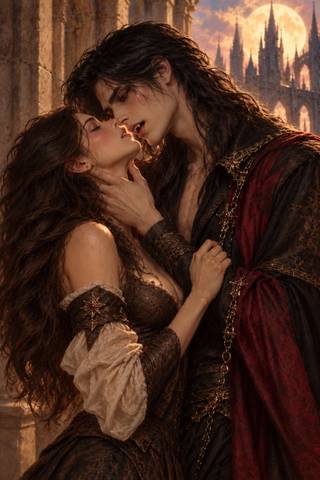
Dark Romantasy Vampire
Bloodbound
with Severin Morcant
Your blood is the one thing every vampire alive would kill for, and the only one who won't take it is the man you came to kill.
Read Chapter 1 free
-
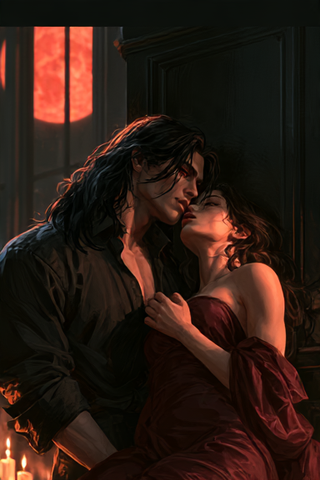
Dark paranormal romance
Marked
with Lucian Vale
One mouthful of your blood buys a vampire the sun. The King of this city had it on his lips and stopped — and now you have seven nights under his roof wearing his mark, and the only thing hiding you burns off every time he touches you.
Read Chapter 1 free
-
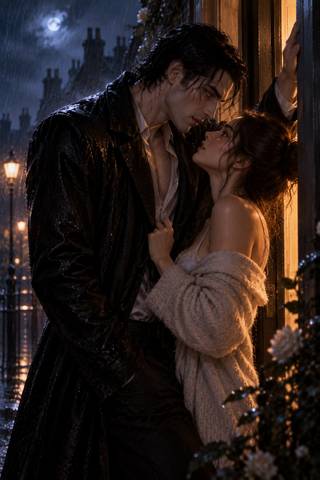
Paranormal rom-com
Ask Me Twice
with Bram Cullane
Your neighbour has dug your graves and drunk your tea on that step for years and still cannot come inside, because the door only opens for somebody in love with him.
Read Chapter 1 free
Questions readers actually ask
What is gothic romance?
Gothic romance is a love story where atmosphere does the work of an antagonist. A decaying house, an isolated setting and a secret nobody will explain generate dread, and the romance grows inside that pressure. The threat is ambient rather than personal — the heroine is unsettled long before she has anyone specific to fear.
What is the difference between gothic romance and dark romance?
Gothic romance locates its dread in the setting. Dark romance locates it in the love interest. In a gothic, the question is what this place is hiding. In a dark romance, the question is what he has done and whether the book will excuse it. One is a mood and a mystery, the other is a moral position.
Can a book be both gothic and dark romance?
Yes, and many of the best ones are. A crumbling estate supplies the atmosphere while a genuinely compromised love interest supplies the moral trouble. The labels sit on separate axes, so a book can score high on both, high on one, or wear gothic styling with no darkness underneath at all.
Does gothic romance have to be historical?
No. The historical setting is a convenience, not a requirement — it makes isolation and secrecy plausible. Contemporary gothics achieve the same effect with a remote research station, an inherited house nobody wants, or an institution with its own rules. What matters is that leaving is difficult and information is withheld.
Is gothic romance always dark or scary?
It is always uneasy, which is not the same thing. Gothic romance runs on suspense and wrongness rather than gore or cruelty. Plenty of gothics are melancholy and tender, and the danger resolves into something sad rather than something violent. Dread and brutality are separate settings.