
The Vampire King Trope: Power, Court Politics, and the Woman Who Isn't Impressed
The vampire king trope pairs an immortal ruler — a vampire with a court, a throne and rivals who want both — with a heroine who refuses to be impressed by any of it. It differs from the lone brooding vampire because the stakes are political as well as personal. Wanting her costs him standing, and her leverage is simple: she is the one person in the room who won't kneel.
Vampire romance has two default silhouettes. One is the man alone — a coat, a city at night, several centuries of guilt and an apartment he has never once redecorated. The other is the man with a room behind him: advisers, rivals, a treasury, a succession problem, and a handful of people who would prefer him dead by spring.
Both work. They do not work the same way.
The crown moves the stakes out of his head
The lone vampire's conflict is interior. He wants her, he is dangerous, he is frightened of himself, and the plot is largely a matter of him losing an argument with his own restraint. That engine is the one running under vampire romance as a whole, and it is a good engine. It also runs on one man's private weather, which is difficult to sustain across four hundred pages without the reader wanting someone to open a window.
Give him a throne and the identical wanting acquires consequences outside his own skull. She is no longer a temptation; she is a diplomatic incident. Every private moment has a public price, and somebody is always keeping the accounts.
This instinct is older than the romance shelf. Dracula is a count before he is a monster — a man with land, a household, laws of hospitality and a very clear sense of what he is owed. His power is territorial and domestic, not merely physical. Twilight put its most effective pressure on the same lever: the Volturi are not scarier than the Cullens because they bite harder, they are scarier because they are a tribunal, and the closing tension of that series is a ruling body deciding whether a family is permitted to exist. Bureaucracy, it turns out, is terrifying when it can sentence you.
Court politics is a machine for generating the same scene forty ways
What a court actually buys an author is witnesses.
Romance runs on constraint, and a throne room is constraint made architectural. Every look is observed and costed. He cannot cross a floor to her without eleven people noticing that he crossed it. She cannot refuse him without the refusal becoming information that someone will sell. Two people who might, in a quiet room, resolve their situation in a page are instead forced to conduct it in public, in code, over months. That is not a limitation. That is the entire product.
Scarlett St. Clair's King of Battle and Blood understands this from the first chapter: Isolde is married off to Adrian, the vampire king, arriving in his court with an assassination on her personal agenda. The setup does an enormous amount of structural labour before anyone speaks. She is inside his house, his politics and his marriage before she has any reason at all to like him. It is enemies to lovers with a seating plan.
A court also supplies antagonists who are not him. This is the underrated part. The ambitious adviser, the older vampire who remembers exactly how he took the throne, the rival house with a claim — all of them let the world stay hostile while the love interest stays someone you would actually want to spend a book with. Without them, every obstacle has to come out of his behaviour, and he has to keep being awful to keep the plot moving.
The machinery is not exclusive to fangs, either. A ballroom is a court with better lighting and a stricter dress code, which is why the Regency version on the Almost Kiss story shelf, The Ruin of Miss Everly, runs on the same principle: a room full of people whose good opinion is currency, and two of them determined to spend it recklessly.
The consort question
Here is the question the trope cannot skip, and the one weaker books hurry past: what, precisely, is he offering her?
A king does not simply fall in love. He installs someone. Consort is a position — it comes with a title, a household, an assassination risk that did not previously exist, usually the expectation of immortality, and a set of duties nobody in the book has thought to write down. When a story treats he made her his queen as the resolution, it has confused a promotion with a proposal.
Anne Rice staged the sharpest version of this. In The Queen of the Damned, Akasha wakes after millennia and wants Lestat beside her — not as a secret, but as a consort in a plan for the world that he finds monstrous. The offer is genuine: power, permanence, and the undivided attention of the most formidable being alive. It is still refusable, because of what is attached to it. That is the shape the trope wants. Make the offer legible, make its price visible, and let her say no if no is the honest answer.
The contract-marriage crowd has been solving this problem for years, which is why the political marriage and the boardroom prenup are structurally the same instrument: two people negotiating terms for something neither of them is admitting they want. Terms & Conditions takes that route without the fangs.
"He could have anyone" only works if she's genuinely unmoved
This framing gets used constantly, and it is doing real work — the fantasy is being chosen without ambivalence by someone with unlimited options and unlimited time. But it collapses the moment she is dazzled.
If she spends the book awed by him, the sentence quietly inverts. He is no longer choosing her against the weight of every other possibility; he is a powerful man accepting admiration, which is not a romance, it is a court appointment. The reader can feel the scales tip even if they cannot name why.
Being unimpressed is also not the same as being sassy. A heroine who fires off a quip every time he enters a room is still organising her entire personality around his presence, just in the negative. The convincing version is a woman with her own project — something she came to court to do, something she will still be doing if he never speaks to her again. Indifference is structural, not verbal.
What she offers him, in exchange, is the only honest feedback he has received in three hundred years. Everyone else at court is managing him. She is not, and for a man who can compel, threaten or outlive any other opinion in the building, that is the rarest thing on offer. It is also why the trope pairs so naturally with morally grey love interests: he has to remain genuinely capable of the thing he is choosing not to do to her, or the restraint means nothing.
Where it goes wrong
Three complaints come up again and again, and all three are fixable.
The throne is set dressing. He is called king. Nobody obeys him, he has no duties, no council convenes, no war is pending, and his rule never once interrupts his schedule. Court becomes a costume, and readers notice fast.
The politics never touch the romance. Forty pages of factions that could be deleted without changing a single beat between the leads. The test is simple: does the political plot alter what these two are allowed to do to each other? If the answer is no, it is homework.
The unimpressed heroine folds anyway. She holds the line for eight chapters and then capitulates the moment he does something mildly gentle, which retroactively converts her spine into a delaying tactic. The overcorrection is just as bad — a woman so committed to refusing that she never moves at all, which is stalemate, not slow burn.
Underneath all three is the same failure: nobody pays for anything. If his favouritism costs him no allies, if her defiance costs her no safety, if the court has no opinion about either, then the crown was decoration and the story could have taken place in a car park.
The good ones are ruthless about cost. He rules something specific. Wanting her damages him in ways his advisers can itemise. She has a reason to be in the room that has nothing to do with him. And the moment everyone else in that room kneels, she is still standing — not to make a point, but because it genuinely did not occur to her to do otherwise.
If that is the register you want, it is the one we built MARKED in — an interactive vampire king romance, where the court has opinions and he remembers every choice you make.
You arrive as a problem he cannot solve politically, and Chapter 1 is free. Start it here — every story on the shelf has one too —. Chapter 1 is free, no sign-up — start below.
Read it as a story
-
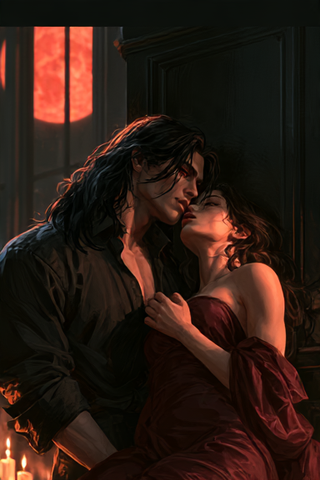
Dark paranormal romance
Marked
with Lucian Vale
One mouthful of your blood buys a vampire the sun. The King of this city had it on his lips and stopped — and now you have seven nights under his roof wearing his mark, and the only thing hiding you burns off every time he touches you.
Read Chapter 1 free
-

Dark Romantasy Vampire
Bloodbound
with Severin Morcant
Your blood is the one thing every vampire alive would kill for, and the only one who won't take it is the man you came to kill.
Read Chapter 1 free
-

Paranormal rom-com
Ask Me Twice
with Bram Cullane
Your neighbour has dug your graves and drunk your tea on that step for years and still cannot come inside, because the door only opens for somebody in love with him.
Read Chapter 1 free
Questions readers actually ask
What is the vampire king trope?
The vampire king trope pairs an immortal ruler — a vampire with a court, a throne and rivals who want both — with a heroine who refuses to be impressed by any of it. Unlike the lone brooding vampire, his feelings have political consequences, so wanting her costs him standing as well as peace of mind.
Why are vampire courts so common in romantasy?
Because a court manufactures obstacles the author would otherwise have to invent. Advisers, rivals, treaties and succession problems all generate reasons the two leads cannot simply be together. It also supplies antagonists who are not the love interest, which keeps him appealing while the world around him stays genuinely hostile.
What makes a good vampire king love interest?
He has to actually rule something specific — a territory, a treaty, a blood supply, a fractious council — and wanting her has to cost him. If the crown never generates a duty, a consequence or an enemy, it is a costume rather than a character, and the romance loses the stakes it was built on.
What does consort mean in vampire romance?
Consort is the partner of a reigning monarch, and in vampire romance it is usually a position rather than a private relationship. It comes with a title, a target, and often the expectation of immortality. The best books treat it as an offer she can genuinely refuse, not an automatic happy ending.