
Enemies to Lovers: What It Actually Means, and Why It Works
Enemies to lovers means two people who genuinely want each other to lose end up choosing each other instead. The bar is opposition with actual consequences — not bickering, not a misunderstanding, not mutual irritation. It works because hatred is a form of close attention, and watching that attention curdle into understanding produces a payoff no other structure can match.
It is the most requested trope in romance and, not coincidentally, the most frequently mislabelled one. A book gets tagged enemies to lovers, a reader arrives expecting a war, and gets two people who sniped at each other twice at a work function before falling into bed. The tag isn't wrong because the author lied. It's wrong because nobody agrees where the line is.
So let's put it somewhere defensible.
The test
If one of them succeeds, does the other one lose something real?
That's it. That's the whole test.
Two colleagues competing for the same promotion — that's rivals. They want the same prize, and the prize is the conflict. Take away the promotion and they might get along fine.
Two people on opposite sides of a war, or a feud, or a court where her family's survival depends on his failure — that's enemies. It's why the political setups do so well here, and why the vampire king and his court arrive with the opposition already built. Remove the romance and they'd still be trying to ruin each other.
The distinction matters because the two structures resolve completely differently. Rivals need a compromise: someone concedes, or the prize turns out not to matter. Enemies need a reckoning — one or both of them has to be shown, on the page, that they were wrong about the other person. That's a much heavier lift, and it's why enemies to lovers books that fumble tend to fumble in the last third.
Why it works on us
There are three things happening at once, and they compound.
Hostility and attraction feel similar from the inside. Elevated heart rate, hyper-awareness of where the other person is in the room, an inability to stop thinking about them. The body doesn't cleanly distinguish between "I am furious with you" and "I want you," which is why the flip lands as plausible rather than absurd. The story isn't converting one state into another. It's relabelling a state that was already there.
Hate is attention. This is the one that does the most work and gets discussed the least. Indifference is the actual opposite of love. An enemy watches you constantly — learns your habits, predicts your moves, notices when something's off. By the midpoint of a good enemies-to-lovers book, these two people know each other better than anyone else in their lives does, and they got there by trying to win.
That's why the turn feels earned rather than sudden. The intimacy was already built. It was just pointed the wrong way.
The contrast is the payoff. A man who is warm to everyone being warm to her means nothing. A man who is genuinely dangerous to the world being careful with her means everything — the same contrast engine running under morally grey love interests and under most of vampire romance. Enemies to lovers is the purest form of it, because the reader has watched him be awful and can measure the difference precisely.
The three stages
A functioning enemies-to-lovers arc has all three. Skip one and readers feel it, even if they can't name what went wrong.
1. Genuine conflict
They have to actually be enemies, and the reader has to see the damage. Not reported enmity — "our families have hated each other for generations" — but a scene where one of them does something that genuinely costs the other.
This is where most books underdeliver. Making the love interest properly unpleasant is uncomfortable to write, so authors soften him early, and then the arc has nowhere to travel.
2. Forced reassessment
Something makes it impossible to keep the caricature intact. Usually proximity — they're trapped, allied against something worse, or dependent on each other — and the mechanism is almost always the same: one of them sees the other do something that doesn't fit.
He's cruel at court and gentle with the servants. She's ruthless in negotiation and sits with a dying man because nobody else will. The reassessment isn't "he's actually nice." It's "my model of this person was incomplete, and I don't know what to do with that."
3. Surrender
One of them stops fighting it, on the page, at a cost. This is where the grovel lives if a grovel is owed — and in enemies to lovers, one is usually owed.
The failure mode here is resolution by external event: the war ends, the misunderstanding clears, the villain is revealed and suddenly they're on the same side. That's the plot letting them off. The reader wanted to watch someone choose, and instead watched circumstances choose for them.
Where it goes wrong
Four recurring problems, all diagnosable early:
- The enemy who was never a threat. He's introduced as terrifying and is charming by chapter four. Nothing to overcome.
- Conflict that's actually a misunderstanding. If a five-minute conversation would dissolve the enmity, they aren't enemies. They're two people with poor communication and a plot that depends on it.
- The unearned pivot. She hates him, then there's one good scene, then she doesn't. The reassessment needs weight equal to the original opposition.
- Forgiveness off the page. He does something genuinely unforgivable, there's a time skip, and it's resolved. Readers will accept a great deal from a love interest — but they want to watch it cost him.
Who has to change
A question readers argue about constantly, and the answer is less symmetrical than it looks.
Usually he changes more, because usually he did more damage. But the arcs that stay with people are the ones where both positions were partly wrong. She was right that he was dangerous and wrong about why. He was right that she was naive and wrong about what she'd do with the knowledge. Neither of them was simply mistaken; both had a real case built on incomplete information.
That symmetry matters because it protects the heroine from a specific and common indignity — the arc where she was correct the entire time and merely has to wait for him to catch up. That isn't a relationship developing. That's a woman being patient.
The other trap is changing him too completely. If the man who was genuinely ruthless in chapter one is uniformly tender by the end, the story has deleted the person she fell for. What readers generally want is a man who is exactly as dangerous as he always was, with the aim adjusted.
The pacing question
"Slow burn" gets used as a synonym for "long," and it isn't. A slow burn is escalation. Every scene should leave the two of them slightly less able to maintain the position they started in.
The test is simple: what does she know now that she didn't fifty pages ago? If the answer is nothing, that isn't a slow burn, it's a holding pattern. The tension in enemies to lovers comes from the ground shifting, not from the author withholding a kiss for four hundred pages.
Done properly, the almost — the moment where they're close enough that it would be easy, and one of them steps back — is worth more than the kiss. Everything the trope has built lives in that half-second of refusal.
Which is, more or less, why we built MARKED the way we did.
He's a vampire king. You're the one person at his court who won't kneel, and he has every reason to consider that a problem. You make the choices — and because the story remembers them, the ones you make while you still hate him have a way of coming back.
Start reading MARKED free. The Ruin of Miss Everly starts free too, and runs the same structure through a Regency season where the opposition is her reputation — the rest of the library starts free too. Chapter 1 is free, no sign-up — start below.
Read it as a story
-
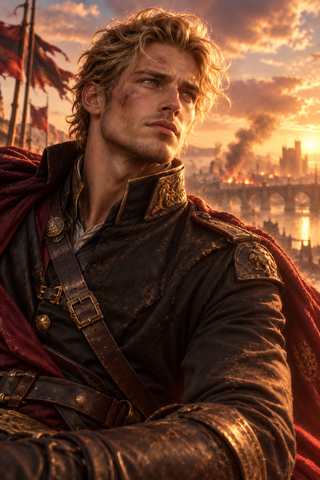
Wartime Enemies
The Knife Between Us
with Colonel Anton Rhyse
You came through the enemy colonel's window to kill him, and your own side came through the door to kill you both.
Read Chapter 1 free
-
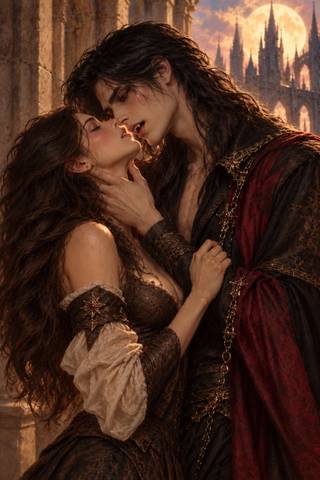
Dark Romantasy Vampire
Bloodbound
with Severin Morcant
Your blood is the one thing every vampire alive would kill for, and the only one who won't take it is the man you came to kill.
Read Chapter 1 free
-
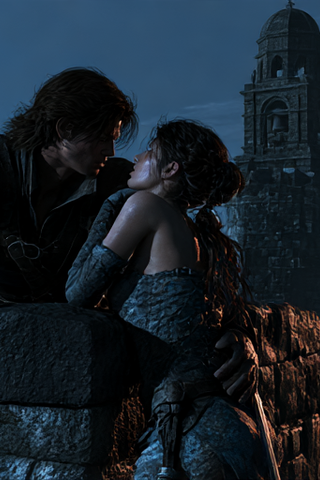
Romantasy
Only One of Us
with Soren
You have a week to kill the enemy's champion on the sand in front of both kingdoms, and last night he kissed you back.
Read Chapter 1 free
Questions readers actually ask
What does enemies to lovers mean?
Enemies to lovers describes a romance where the two leads begin in genuine opposition — they want each other to lose, not just to lose an argument — and end up together. The defining test is whether one succeeding requires the other to fail. Without that, it's banter, not enmity.
Why do readers love enemies to lovers?
Hostility and attraction produce similar physical states, so the tension converts cleanly into desire. Beyond that, hate is a form of attention — an enemy studies you closely — and watching that scrutiny turn into understanding is the actual payoff. The love feels earned because it required both people to be wrong first.
What is the difference between enemies to lovers and rivals to lovers?
Rivals want the same thing and compete for it; they can respect each other throughout. Enemies want each other defeated, and there is usually real injury involved. Rivals to lovers needs a compromise. Enemies to lovers needs a reckoning — someone has to be shown they were wrong about the other person.
How long should an enemies to lovers slow burn take?
Long enough that the shift is legible, which usually means most of the book. The workable test isn't page count but movement — if a character knows something about the other now that they didn't fifty pages ago, the burn is progressing. If nothing has changed, the author is stalling.