
What Is Dark Romance? The Genre, Defined Without the Hand-Wringing
Dark romance is romance where the love interest, the relationship or the world is morally dangerous, and the story asks the reader to stay with that danger rather than be rescued from it. The hero is a threat as well as a temptation. It is still a romance, so the love story stays at the centre, but the comfort usually built into the genre is deliberately taken away.
That is the whole definition. Everything else people argue about, from content warnings to whether a given book counts, is a matter of degree inside that frame. If you already know you want the books rather than the theory, the dark romance stories hub collects them in one place.
What does dark romance mean?
Dark romance means the danger comes from inside the love story, not just around it. In plenty of romances someone gets kidnapped, shot at or chased across a continent, and the hero is the one who saves the day. In a dark romance, the hero is often the reason the heroine needs saving in the first place.
That shift sounds small and changes everything. A romantic suspense novel asks whether the couple will survive the villain. A dark romance asks whether the heroine can survive the man she is falling for, and whether she should want to. The reader is not watching a good man protect a woman from the dark. She is watching a woman negotiate with the dark directly, and finding out it negotiates back.
Readers use a quick shorthand for this. If you could remove the hero and the book would become safe, it is probably dark. If you remove him and the danger is still there, it is probably a thriller with a romance in it.
What makes a romance book dark?
Three things make a romance book dark, and most books in the genre have at least two of them.
- A love interest who does real harm. Not a grumpy man with a tragic past, but someone who kills, kidnaps, threatens, stalks or rules through fear, on the page, and does not stop simply because he has met her.
- A relationship built on an imbalance of power. Captor and captive, boss and debtor, mafia don and the woman who owes him. Consent, trust and choice are the live questions of the book, not settled background.
- A world without a safety net. No police to call, no friend who will take her in, no rule the bad men are afraid of breaking. The heroine has to deal with him because there is nobody else to deal with.
What dark romance usually keeps, even at its most extreme, is the core promise of romance: the relationship is the point. That is the line readers draw between dark romance and horror or literary fiction about abusive relationships. Those books can be dark and romantic in subject. Dark romance is dark and a romance, with all the emotional priorities that label carries.
What dark romance does not mean
Dark romance does not mean spicy. It is not a heat level. A dark romance can be fully explicit or can keep the bedroom door shut and still be one of the most unsettling books on your shelf, because the darkness lives in the moral stakes, not in the sex scenes. Mixing the two up is the most common complaint in reader threads: people pick up a dark book expecting heat and get dread, or pick up a high-heat book labelled dark and find nothing morally difficult in it at all.
Dark also does not mean gothic. Gothic romance is a mood built from a setting, the isolated house and the family secret, and our gothic romance vs dark romance breakdown goes through the difference in detail. The short version is that gothic dread comes from the place and dark dread comes from the person.
And dark does not mean tragic. A dark romance is still a romance, which in the genre sense means the love story is meant to land. Sad books with doomed lovers are a different shelf entirely. The darkness is in the journey and the man, not in a promise that it all ends badly.
Is dark romance a genre?
Yes. Dark romance is a recognised subgenre of romance, with its own reader community, its own shelving on retail sites and its own conventions, the most visible being the content warning page at the front of the book. It is not a single trope. It is a tone and a level of moral risk that can carry many tropes inside it.
Some of the tropes that live most comfortably under the dark label are mafia romance, captive or kidnapping romance, obsession and stalker romance, revenge romance, villain romance, and bully romance. Our list of dark romance tropes goes through each of them, so there is no need to repeat it here. What matters for the definition is that none of those tropes is automatically dark. A mafia romance can be cosy and a revenge romance can be light. The label depends on how far the book is willing to go and how little it cushions the heroine.
How dark romance overlaps with morally grey, mafia and paranormal
Dark romance overlaps heavily with morally grey romance but is not the same thing. A morally grey hero does bad things for reasons the reader can understand, and the book usually weighs those reasons. A dark romance hero may be morally grey, or he may be well past grey into what readers half-jokingly call morally black, someone the book makes no case for at all. If you want the full argument about where grey ends, our pillar on morally grey characters in romance is the place to go.
Mafia romance is the overlap most readers meet first. Organised crime hands an author a hero with built-in violence, a world with its own law, and a reason the heroine cannot simply walk away. Terms & Conditions opens on exactly that pressure: you came to kill Lazar Tsarev, and he already had your name printed on the folder. That is the dark romance setup in one line. She is dangerous to him, he is far more dangerous to her, and the power sits entirely on his side of the desk.
Paranormal romance is the other big overlap, because a vampire or a demon is a predator by definition. In Marked, a mouthful of your blood would buy Lucian, the vampire King of the city, the sun, and he has already had it on his lips and stopped. Now you have seven nights under his roof wearing his mark. The danger is not hypothetical. It is the premise. When the Demon King Knelt goes further still: Elias Vane is kneeling in the rain outside your bookshop, and the first true thing he tells you is that he killed you. When fantasy worldbuilding enters the mix, readers often call the result dark romantasy, which has its own conventions.
Why do people like dark romance?
People like dark romance because fiction is a safe place to feel fear and desire at the same time. A real man who threatens you is a crisis. A man on the page who threatens everyone except you, who could hurt you and visibly chooses not to, is pure charged tension, and the reader can close the book whenever she likes.
Three other reasons come up again and again when readers explain the appeal.
- Devotion at full volume. The dark hero rarely does anything halfway, including love. His obsession, protectiveness and willingness to burn the world down for one person are frightening in life and thrilling on the page.
- The heroine's power. In the best dark romance the heroine is not a victim the book feels sorry for. She is the one person who unsettles him, and much of the pleasure is watching the balance of power shift by inches.
- Honesty about wanting. Dark romance admits that people are sometimes drawn to what is bad for them. Readers who find polite romance a little bloodless often find that admission a relief.
The common complaints are worth knowing too. Readers dislike dark romance that is dark only on the back cover, where a supposedly terrifying hero turns out to be a sulky boyfriend with a gun. They dislike books where the darkness is just a list of shocks with no emotional logic tying them together. And they strongly prefer clear content warnings, because the whole point of the genre is choosing which kind of dark you want before you walk into it.
How to tell if a book is dark romance before you start
A book is probably dark romance if its blurb makes the love interest the threat. Look for the warning page, the words captive, owned, obsessed or revenge in the description, and a hero whose job or nature involves hurting people. If the blurb promises that he will protect her from danger, you are more likely in romantic suspense. If it warns that he is the danger, you are in the right place.
Interactive stories add a useful twist here. When you make the choices, you decide how close to stand to the dangerous man, and the story remembers what you did. Almost Kiss is written for readers 18+, all chemistry and tension, with no explicit scenes, and the full Almost Kiss library is sorted so you can find the darker stories quickly.
If you want to feel the definition rather than read it, start with Terms & Conditions, where you walk in to kill Lazar Tsarev and find he has been expecting you. Chapter 1 of every story is free, no sign-up, so there is nothing stopping you from finding out how dangerous he is tonight.
Read it as a story
-

Dark mafia romance
Eyes On You
with Sev Marchetti
You stole a car with a body in the trunk, and the mafia man sent to decide if you live has moved in across the hall.
Read Chapter 1 free
-
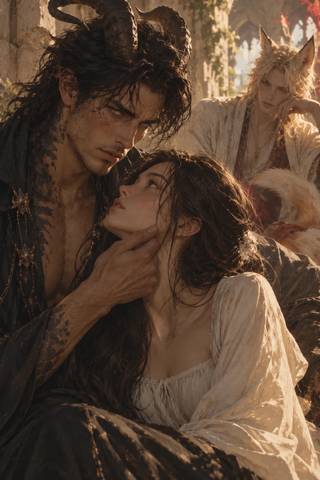
Dark Romantasy
The Dragon's Undoing
with Torren of Cinders
You were only there to make sure the brides could say no, and then the city's dragon looked at you and every flame in the room went out.
Read Chapter 1 free
Questions readers actually ask
What is dark romance?
Dark romance is a romance subgenre in which the love interest, the relationship itself or the world around the couple is morally dangerous. The book does not rescue the heroine from that danger. It keeps her, and the reader, inside it, and the love story has to grow under that pressure rather than after it has been removed.
What is the difference between dark romance and regular romance?
In regular romance the obstacles sit between the couple, such as a misunderstanding, a rival or a deadline. In dark romance the main obstacle often is one of the couple. The love interest is a threat as well as a temptation, and the book asks the reader to want him while fully understanding what he is.
Is dark romance the same as gothic romance?
No. Gothic romance gets its dread from the setting, such as an isolated house or a family secret. Dark romance gets its dread from the person, usually the love interest and what he has done. A book can be both, but the labels measure different things, and plenty of gothics are gentle at heart.
Why do people like dark romance?
Readers like dark romance because fiction lets them feel fear and desire at the same time with nothing real at stake. A dangerous love interest who chooses restraint, or devotion, is intensely charged. The genre also takes big feelings seriously, and many readers find that honesty more satisfying than a polite romance.
Is dark romance a genre or a trope?
Dark romance is a subgenre, not a single trope. It is defined by tone and moral stakes, and it contains many tropes inside it, including mafia romance, captive romance, obsession, revenge and villain romance. A trope is a story pattern, while dark romance describes how dangerous the whole book is willing to be.