
Where to Start With Enemies to Lovers, Depending on What You Actually Want
Start by naming the flavour you want, not the highest-rated title. Enemies to lovers splits into four moods: cold and courtly, where rank does the fighting; funny and mean, where the war is verbal; genuinely dangerous, where one lead could actually destroy the other; and historical, where the stakes are social ruin. Pick the mood first and the book almost chooses itself.
The reason "best enemies to lovers books" lists so often let people down is that they treat the trope as one thing. It isn't. A reader who wants two people bound by an old grievance in a court that is watching them and a reader who wants a colleague sabotaging a coffee order are asking for opposite experiences, and both are legitimately enemies to lovers. Sorting by mood gets you a book you'll finish. Sorting by star rating gets you someone else's mood.
If you want cold and courtly
This is the version where nobody raises their voice. The opposition is structural — rank, allegiance, family, a treaty — and both leads are too controlled to say what's happening. All the heat lives in restraint: a hand not taken, a title used instead of a name, one sentence that lands harder than a shouted argument would.
Pride and Prejudice is still the template, and it earns it. Elizabeth Bennet refuses Darcy's first proposal to his face, and the letter he writes afterwards doesn't apologise so much as force her to re-read everything she thought she understood. That structure — accusation, evidence, revised judgement — is what a huge amount of modern romantasy is still running underneath the magic system.
Elizabeth Gaskell's North and South does the industrial version: Margaret Hale, newly arrived in a mill town, and John Thornton, the manufacturer whose entire worldview she considers indefensible. It's a genuine values conflict rather than a misunderstanding, which is exactly why it holds.
For the fantasy version of cold and courtly, The Hurricane Wars by Thea Guanzon puts two soldiers from opposite sides of a war into a political marriage. Neither of them stops being what they were. That's the mode's defining move: the enmity doesn't evaporate when the romance starts, it gets negotiated.
If this is your mood, you're really after a long delay handled well, which is its own craft problem. The pacing rules that separate a working slow burn from a stalled one are worth reading before you commit to a 600-page court intrigue.
If you want funny and mean
Here the enmity is voluntary. Nobody's life is at risk; what's at risk is dignity, and these characters would rather die than lose an exchange.
The Hating Game by Sally Thorne is the reliable entry point. Lucy and Joshua share an office after a publishing merger, run private games neither has admitted to, and then compete for the same promotion — which turns a stalemate into something that has to break. The mechanism is clean: the workplace forces proximity, the promotion forces stakes.
Red, White & Royal Blue by Casey McQuiston starts with a years-long antipathy between the American president's son and a British prince, a very public disaster involving a cake, and a PR-mandated fake friendship that neither of them wants. The comedy carries genuine consequences, which is why it doesn't collapse into fluff.
And if you want the oldest version, Beatrice and Benedick in Much Ado About Nothing have been doing this since the 1590s. Everyone around them can see it. That's part of the joke.
A caution about this mood: it's where the mislabelling problem lives. A great deal of what gets shelved here is bickering with a marketing tag, and the difference matters more than it sounds — rivals want the same prize, enemies want each other to lose. Both can be excellent. Going in expecting one and getting the other is what produces a two-star review.
If you want genuinely dangerous
This is the mood where one character has real power over the other, and giving in has a price. Fantasy carries it best, because fantasy can make the threat literal instead of metaphorical.
Fourth Wing by Rebecca Yarros puts Violet in a war college where her survival is not assumed, alongside Xaden, whose family history and hers make trust an actively stupid decision for both of them. Powerless by Lauren Roberts sets a woman hiding what she is against the prince whose role is to hunt exactly that. From Blood and Ash by Jennifer L. Armentrout runs on the reveal that the guard assigned to protect Poppy is not what he has claimed to be — the reader's understanding of the relationship is rewritten mid-series.
And A Court of Mist and Fury is the case study everyone cites for a reason: a love interest introduced as a threat in the previous book becomes the one who treats the heroine as capable. That reversal is the whole appeal of the dangerous mode, and it only works because the earlier menace was real.
If you're heading this direction, it's worth knowing where the boundary sits between fantasy romance with a sharp edge and genuine dark romantasy, where the darkness is in the story's structure and not just its aesthetic. Books get shelved together that are asking very different things of you.
If you want the historical version
Historical enemies to lovers has an advantage the contemporary version has to work for: the obstacle is already built. Class, inheritance, reputation, an engagement that can't be broken without ruining someone. Nobody has to invent a reason these two people can't simply talk it out at a coffee shop.
It's also the mood where hostility reads loudest at the lowest volume. When a cut direct in a ballroom is a genuine act of social violence, a character doesn't need to threaten anyone. Regency and Victorian settings give writers a scoring system for cruelty that everyone in the scene understands.
This is the corner of the genre we're building The Ruin of Miss Everly for — Regency, enemies to lovers, a woman whose standing is already halfway gone and a man who could finish the job or save her, and who hasn't decided which. It's on the story shelf with everything else in development if you want to see the range.
Sorting by heat, not just by mood
Heat level is a separate axis from tone, and conflating the two is how readers end up in the wrong book. Enemies to lovers runs the entire range. There are closed-door historicals and fantasy romances where the charge stays in glances and near-misses, and there are explicit contemporaries where it very much does not. Divine Rivals by Rebecca Ross — two rival newspaper columnists writing to each other by typewriter during a war — is not a low-tension book, it's a low-heat one. Those aren't the same thing.
Most retailer pages, StoryGraph entries and reader lists label spice separately from trope. Use that filter. A lower-heat book isn't a diluted version of a spicy one; restraint is its own register, and for a lot of enemies-to-lovers arcs it's the sharper choice, because the not-yet is the plot.
Before you buy: the four-chapter check
Whichever mood you've picked, one test saves you a lot of disappointment. Read to about chapter four and ask what the opposition actually costs. Has either character done real damage to the other, or are they simply annoyed? Would one honest conversation dissolve the entire conflict?
If the answer is that a conversation would fix it, you're holding a book that will thin out in the last third. That's the single most common failure mode, and the early warning signs are legible well before the halfway point once you know what to look for. If you want the underlying anatomy — the three stages the arc needs and why the payoff hits when it's built properly — the full breakdown of what enemies to lovers actually means is the place to start.
Or be in it, rather than reading it
The thing a book can't give you is the reply. In MARKED, our vampire king story, you're the one being summoned to a court that has decided what you are before you arrive, and the antagonism is aimed at you — he answers what you actually say, and the story remembers which version of you showed up.
If the courtly-and-cold mood is the one you're in, start MARKED and read Chapter 1 free. It's built on restraint, and the first refusal is yours to make.
Read it as a story
-
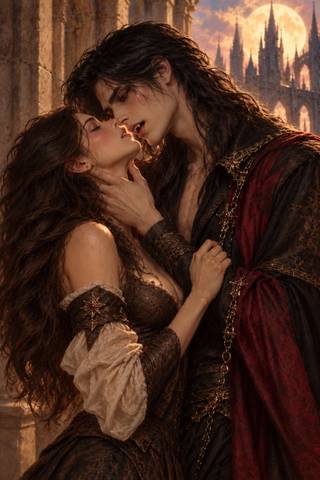
Dark Romantasy Vampire
Bloodbound
with Severin Morcant
Your blood is the one thing every vampire alive would kill for, and the only one who won't take it is the man you came to kill.
Read Chapter 1 free
-
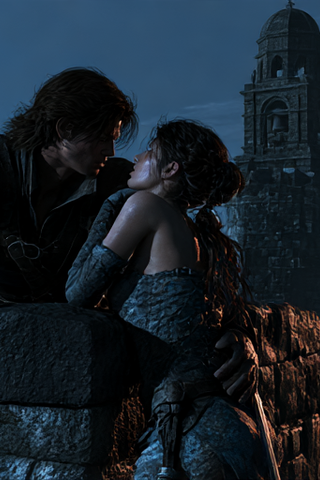
Romantasy
Only One of Us
with Soren
You have a week to kill the enemy's champion on the sand in front of both kingdoms, and last night he kissed you back.
Read Chapter 1 free
-
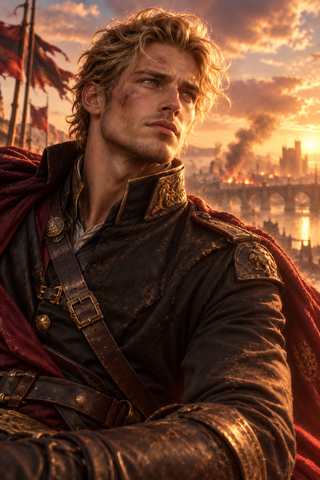
Wartime Enemies
The Knife Between Us
with Colonel Anton Rhyse
You came through the enemy colonel's window to kill him, and your own side came through the door to kill you both.
Read Chapter 1 free
Questions readers actually ask
What is a good enemies to lovers book to start with?
Start with the mood rather than the ranking. If you want restraint and status, Pride and Prejudice is still the blueprint. If you want the funny version, The Hating Game. If you want two people who could genuinely destroy each other, go to fantasy — Fourth Wing or Powerless. Each teaches you a different thing the trope can do.
What is the difference between dark and light enemies to lovers?
Light enemies to lovers builds its conflict out of pride, rivalry and misjudgement, and the worst outcome is embarrassment. Dark enemies to lovers puts real power between the leads — one can imprison, expose or kill the other — so surrender carries a cost. Same shape, completely different stakes.
Are all enemies to lovers books spicy?
No. The trope runs the full heat range, from closed-door historicals and YA-adjacent fantasy where the tension stays in the looks and the silences, to explicit contemporary romance. Heat level is listed separately from trope on most retailer pages and reader lists, so you can filter for it before you buy.
Is enemies to lovers the same as rivals to lovers?
No. Rivals want the same prize and compete for it. Enemies want each other to lose. The test is whether one character winning requires the other to be harmed, not merely beaten. Plenty of books marketed as enemies to lovers are actually rivals, which is why the ending can feel thin.
How do I avoid enemies to lovers books that disappoint?
Read the first few chapters and ask what the opposition costs. If the two leads could resolve everything with one honest conversation, the hate is decoration and the payoff will be flat. Real enmity has a structural reason behind it that the book has to dismantle piece by piece.