
Why Enemies to Lovers Falls Apart (And How You Can Tell by Chapter Four)
Enemies to lovers fails when the opposition was never real enough to survive contact. Four failure modes account for almost all of it: an enemy who was never actually a threat, a conflict that is really a misunderstanding, a grovel that costs him nothing, and forgiveness that happens off the page. All four are visible early, usually by chapter four.
The disappointment is rarely about the writing. Plenty of the books that get abandoned at 70% are well made — good sentences, likeable people, a plot that moves at a decent clip. What breaks is structural, and structure announces itself early if you know which part to watch.
Failure one: the enemy who was never a threat
He arrives with a reputation. A body count, a court that flinches when he walks in, a nickname nobody says above a whisper. Then he's actually on the page and he is fine. Dry. Ordering her the correct drink without being asked. By chapter four the narration has quietly swapped dangerous for infuriating, and those are not the same word.
Reputation is not opposition. A man can be feared by an entire kingdom and present no obstacle whatsoever to the heroine, and readers clock that gap fast even when they can't articulate it. What's missing is an act: something he does, on the page, in front of you, that costs her something she wanted to keep.
The most common version of this is the one-sided hate. She loathes him. He has been in love with her since before page one. Every cruelty is revealed to be protection, and the reader worked that out around chapter three. Nothing is wrong with that story except its label — it's a pining novel with a delay mechanism, and it can't produce a reckoning because nobody was ever wrong. The reader was the only person in the building who believed the hostility.
The chapter-four tell: has he done anything to her, or has he only been described? Reported menace is set dressing. What actually counts as enemies to lovers starts with damage you can point at.
Failure two: the conflict one honest conversation would end
The second failure mode is subtler because the hostility feels real to the characters. It's just resting on something one of them believes and could stop believing inside a single scene.
Once a story's central conflict is made of wrong information, the author has to spend the rest of the book preventing accurate information from reaching anyone. That's an enormous contrivance load. People stop asking obvious questions. Someone gets interrupted at the exact moment she was going to explain. A letter goes astray in a world with functioning post. Readers don't consciously tally these, but they accumulate as a low irritation, and the irritation has a name: why doesn't she just ask him.
The distinction worth holding on to is that a misunderstanding can perfectly well start a conflict, as long as something structural keeps it standing. Pride and Prejudice is the model. Part of Elizabeth's case against Darcy is false — Wickham lied to her, and a letter corrects it. But the part she's angriest about is true. He pulled her sister's engagement apart, Jane was wrecked by it, and no letter fixes that. The false half is dispatched in a chapter. The true half costs him the entire back end of the novel.
Red, White & Royal Blue runs the mutual-misreading version and is honest about what it is. The hostility is genuine on both sides and mostly assembled out of bad assumptions, and the book resolves it by letting them finally talk instead of pretending the assumptions were a war. It isn't promising a reckoning. It's promising two people getting accurate information about each other at last, which is a real pleasure and a different one.
The chapter-four tell: would a frank ten-minute conversation end this? If yes, watch what's stopping it. A duty, a secret someone will die for, a law — the conflict survives. Bad timing and a slammed door — it doesn't.
Failure three: the grovel that costs him nothing
The damage is real. The apology doesn't match its size. This is the one readers argue about most, and the argument is usually framed as how much grovelling is enough, which is the wrong axis. It isn't about intensity. It's about cost. A man can weep for a chapter and concede nothing.
A grovel that lands tends to have three properties. It happens on the page, not in a summary. It gives up something he was unwilling to lose in chapter one — his position, his plan, his standing in front of people whose opinion he cares about. And it's addressed to the injury rather than to his feelings about having caused the injury. I hate myself for what I did is not an apology. It's a request for comfort, and it puts the wronged party back in the caretaking seat she was supposed to be released from.
The near-miss version is the expensive gesture that costs nothing structural. He buys the building. He flies across the country. Charming, and entirely beside the point if the injury was that he humiliated her in front of everyone she works with, because that debt is payable in public and he has to be the one standing there.
This is also where morally grey love interests come apart most often. A book wants the frisson of a man who does genuinely bad things and then flinches from making him pay for any of it, so it splits the difference: he stays theoretically ruthless and is never actually held to account. You can feel the author negotiating.
The chapter-four tell: the grovel is hundreds of pages away, but you can already see whether the book will let him be properly wrong. If a secondary character has explained his tragic backstory by chapter four, the novel is pre-apologising on his behalf. Pre-apologised heroes almost never grovel, because the book has already decided he was misunderstood.
Failure four: forgiveness that happens off the page
The reckoning gets skipped. A time skip, a line about how they talked it through, a war that ends elsewhere, a worse villain who arrives at the ideal moment and unites them against a common problem.
Romance readers will accept a startling amount from a love interest. The objection is essentially never he did too much. It's I didn't get to watch it be settled. The reconciliation is the thing the whole book was selling, and handing it over as a summary is like a heist film cutting from the planning montage to everyone spending the money.
The romantasy-specific version is a scale mismatch. He has done something at population scale — a city, a bloodline, a pack — and the book resolves it by having her forgive him personally, one on one, in a nice scene. The city is not mentioned again. Readers notice that the arithmetic doesn't work even when they enjoy the scene.
The chapter-four tell: watch how the book handles its first small wrong. If he's cold to her in front of his court in chapter three and it's smoothed over by chapter five with neither of them ever referring to it again, that's the grammar of the whole novel. It will do exactly the same thing with the large betrayal.
The four questions, in one pass
Run these around the fifty-page mark:
- Has he done something to her, or has he only been described as the sort of man who does things?
- If they were honest with each other for ten minutes, would the conflict survive it?
- When something goes wrong between them, does the book make anyone pay, even slightly?
- Does wanting her cost him anything?
That last one does the most work and gets asked the least. In an arc that functions, wanting her is expensive. It costs him standing, or a strategy, or the version of himself he'd spent a lifetime constructing. If he can have her and lose nothing, there is no opposition — there's an obstacle course with a prize at the end.
Which is also how you catch the honest mistake. Sometimes the answers come back saying the book is a rivals story, and that's not a defect at all. Rivals and enemies are two different structures with two different endings, and a rivals novel sold with the louder word is a mislabelled good book, not a broken one. Recalibrate and enjoy the banter.
What a book that's going to work does early
The positive tells are easier to spot than people expect. The love interest is still genuinely difficult at the midpoint, not softened into a grump with a sad past. She's allowed to be right about him and wrong about why, so the correction runs in both directions. Small wrongs get acknowledged rather than absorbed. And there's an almost somewhere in the first half — the moment they're close enough that it would be easy, and one of them steps back at a cost you can name. That single beat tells you more about a book's discipline than any amount of snarling.
That restraint is the whole engine of MARKED, and it's the part we spend the most time on.
He's a vampire king. You're the one person at his court who won't kneel, and his position requires that to stop being true — so wanting you costs him something, and he stays difficult long after it would be convenient for him not to be.
Start reading MARKED free, or look through the rest of the story library — The Ruin of Miss Everly runs the same four tests through a Regency season, where the damage he can do is to her reputation and it doesn't wash off. Chapter 1 is free, no sign-up — start below.
Read it as a story
-
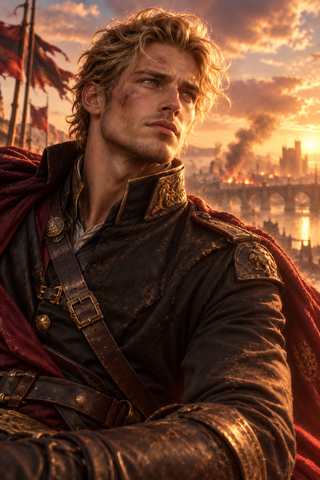
Wartime Enemies
The Knife Between Us
with Colonel Anton Rhyse
You came through the enemy colonel's window to kill him, and your own side came through the door to kill you both.
Read Chapter 1 free
-
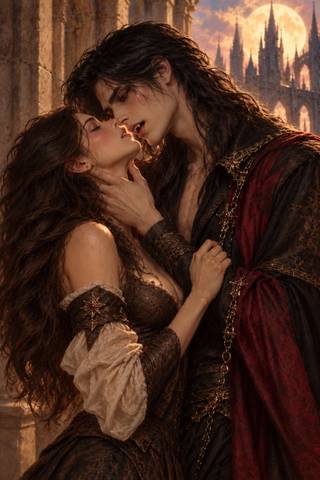
Dark Romantasy Vampire
Bloodbound
with Severin Morcant
Your blood is the one thing every vampire alive would kill for, and the only one who won't take it is the man you came to kill.
Read Chapter 1 free
-
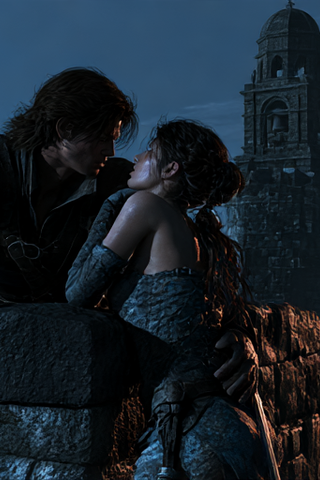
Romantasy
Only One of Us
with Soren
You have a week to kill the enemy's champion on the sand in front of both kingdoms, and last night he kissed you back.
Read Chapter 1 free
Questions readers actually ask
Why do some enemies to lovers books feel unsatisfying?
Because the opposition was never structural. The love interest is described as dangerous rather than shown doing damage, or the conflict rests on a belief that one honest conversation would end. Readers sense the hollowness long before the ending, which is why the last third so often feels like a let-down.
What makes an enemies to lovers arc believable?
An injury that happens on the page, a reason the two of them cannot simply talk it out, and a resolution where somebody pays. The love interest should stay genuinely difficult past the midpoint, and wanting the other person should cost him something he was not willing to lose at the start.
How much grovelling does an enemies to lovers hero need?
Enough to match the injury, measured in cost rather than in tears. A grovel works when it happens on the page, gives up something he valued in chapter one, and addresses what he did rather than how badly he feels about it. Grand gestures that cost only money do not settle the debt.
How can you tell early if an enemies to lovers book will disappoint?
Watch how the book handles its first small wrong. If he is cold to her in chapter three and it is smoothed over by chapter five with nobody referring to it again, that is the grammar of the whole novel. It will treat the large betrayal exactly the same way.
Is one-sided hate still enemies to lovers?
Not really. If he has quietly loved her the whole time and every cruelty turns out to be protection, the reader is the only person ever in opposition. That can be a lovely pining story. It just cannot deliver the reckoning the label promises, because nobody was actually wrong.